ArcGIS

ArcGIS Developed by ESRI,  use for mapping and analytics platform.

ArcMap Provides GIS and Mapping Products- ArcGIS Online, ArcGIS Pro, ArcGIS Enterprise, ArcGIS for Developers.

In below list of ArcGIS Tutorial.

ArcGIS API for Python

ArcGIS Python Tutorial ArcGIS users, developers, and anyone with an ArcGIS Online subscription or ArcGIS Enterprise, leverage the Python ecosystem to automate their workflows and perform repetitive tasks by writing Python scripts. In this tutorial, you will learn how the ArcGIS Python API can help in scripting and automating in WebGIS. ArcGIS API for Python […]
ArcGIS API for Python Read More »

ArcGIS Data Format

Data Format of ArcGIS ArcGIS users to integrate, use, and distribute data in many formats. An ArcGIS lets work with a number of File/Data Formats from many sources. ArcGIS Supported Data Formats Data Format (short form) Data Description (full form) 3DS Autodesk 3ds ADRG ARC Digitized Raster Graphics ADRG ACAD Autodesk AutoCAD DWG/DXF ADAC Australian

ArcGIS Data Format Read More »

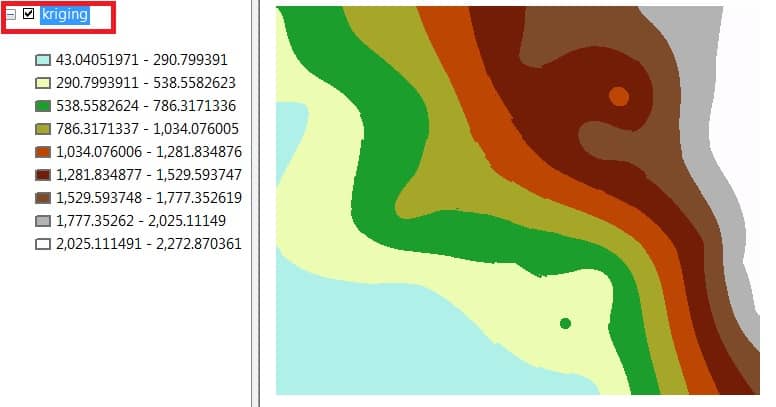
kriging interpolation method

Kriging ArcGIS

kriging in ArcGIS Kriging in ArcGIS is a powerful geostatistical interpolation technique used to predict values at unmeasured locations based on known point data. It’s available primarily through the Geostatistical Analyst extension in ArcMap and ArcGIS Pro. What is Kriging? Kriging is an advanced geostatistical procedure that generates an estimated surface from a scattered set

Kriging ArcGIS Read More »

overlay analysis

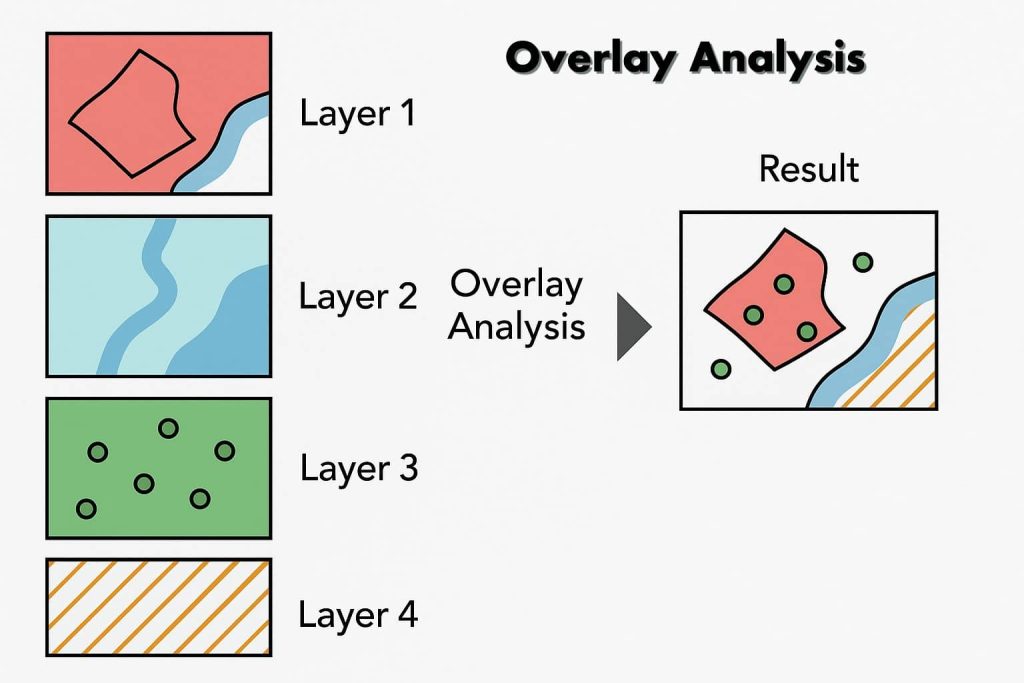
ArcGIS Overlay Analysis

Overlay Analysis ArcGIS Overlay analysis is a technique for applying a common scale of values to diverse and dissimilar inputs to create an integrated analysis. Overlay Analysis in ArcGIS is a fundamental spatial analysis technique that allows users to combine two or more layers to identify relationships and create new information. It is essential in

ArcGIS Overlay Analysis Read More »

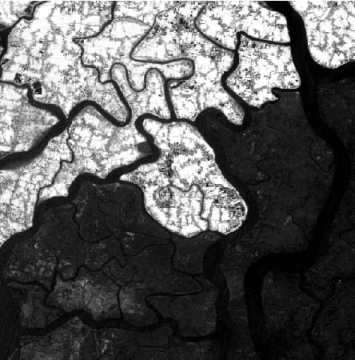
NDVI ArcGIS

ArcGIS NDVI

NDVI Classification in ArcGIS What is NDVI? NDVI stand for Normalized Difference Vegetation Index describes the vegetation density and assessing changes in plant health. NDVI is calculated as a ratio between the red (R) and near-infrared (NIR). In this tutorial learn how to apply the NDVI Formula and calculate vegetation patterns. NDVI Formula (NIR – R) / (NIR + R) NDVI

ArcGIS NDVI Read More »

Scroll to Top